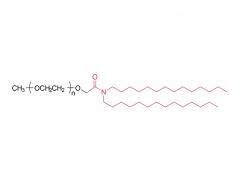


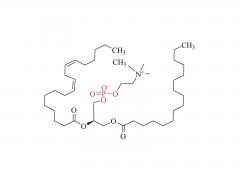
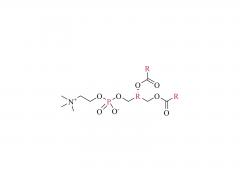
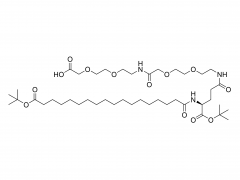
DSPE-PEG-NHS (Distearoylphosphatidylethanolamine-Polyethylene Glycol-Succinimidyl Ester)is a functionalized amphiphilic phospholipid derivative widely used in nanomedicine carriers, bioimaging, targeted therapy, and other fields.
I. Basic Information
-
Chemical Name:Distearoylphosphatidylethanolamine-Polyethylene Glycol-Active Ester
-
English Name:DSPE-PEG-NHS
-
Solubility:Soluble in organic solvents such as chloroform, methanol, and DMSO; can self-assemble into micelles or liposomes in aqueous phase.
-
Storage Conditions:Store dry, protected from light, at –20°C, and avoid moisture.
II. Structural Features
DSPE-PEG-NHS adopts a three-segment design:
-
Hydrophobic Tail (DSPE):Composed of two C18 saturated fatty acid chains, which can embed into the hydrophobic core of liposomes or nanoparticles, providing structural stability.
-
PEG Chain:The polyethylene glycol chain (typically with molecular weights ranging from 1000–5000 Da) forms a hydrophilic protective layer, reducing immunogenicity and prolonging circulation time in the bloodstream.
-
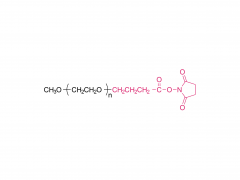
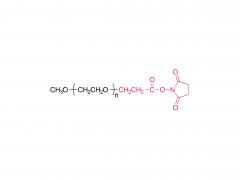
NHS Active Ester Terminal:The N-hydroxysuccinimidyl ester group can covalently conjugate with amino group (–NH₂)-containing molecules (such as antibodies and peptides) under mild alkaline conditions (pH 7–8.5), enabling precise modification with targeting ligands.
III. Application Areas
-
Nanomedicine Carriers
-
Used to construct targeted liposomes or lipid nanoparticles, coupling antibodies, aptamers, etc., via the NHS terminus to achieve tumor-targeted delivery.
-
In cancer therapy, it can conjugate chemotherapeutic drugs or immunomodulators to enhance efficacy and reduce side effects.
-
-
Bioimaging and Labeling
-
Conjugated with fluorescent dyes, magnetic particles, etc., for cell tracking or in vivo imaging.
-
-
Gene Therapy
-
Serves as a carrier material to encapsulate nucleic acid drugs (e.g., siRNA, mRNA) and enhance stability through PEGylation.
-
-
Biomaterial Modification
-
Used for surface functionalization of hydrogels, scaffolds, and other materials to improve biocompatibility.
-
IV. Advantages and Precautions
-
Advantages:Combines membrane-anchoring capability, PEG protective effects, and high conjugation activity, making it a key tool for constructing intelligent nanocarriers.
-
Precautions:The NHS ester is prone to hydrolysis and should be prepared fresh before use; avoid strong acidic or alkaline conditions during handling.