



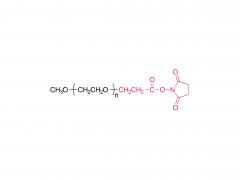
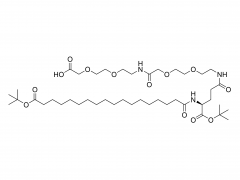
Within the intricate system of Radiopharmaceutical Drug Conjugates (RDCs), there exists a component that, while seemingly auxiliary, is critically vital, directly impacting the drug's stability and targeting efficiency. This component is the monodisperse polyethylene glycol (PEG) derivative. Serving as the crucial linker in RDC drugs, it is quietly propelling tumor precision therapy into a new, more controllable and efficient phase.
What are RDC Drugs?
Structurally, Radiopharmaceutical Drug Conjugates (RDCs) primarily consist of a targeting ligand (Ligand, such as antibodies, peptides, or small molecules), a linker, a chelator, and a radioisotope. Their main mechanism involves using the targeting ligand to deliver the radioisotope to a specific target, leveraging the radiation effects of the radioisotope to achieve precise killing of tumor cells or imaging for medical diagnosis and treatment.

(Image Source: WuXi AppTec Marketing Department WeChat Official Account)
Globally, the R&D progress of RDC drugs is remarkable. Currently, over 10 RDC drugs have been approved for marketing, with several therapeutic radiopharmaceuticals achieving significant success in areas like neuroendocrine tumors and prostate cancer. These successes mark the formal entry of tumor treatment into a new era of precise targeted therapy. Compared to traditional chemotherapy, RDC drugs can act more precisely on tumor cells, improving treatment efficacy while reducing toxic side effects.
Chinese pharmaceutical companies are also accelerating their deployment in this cutting-edge field. According to statistics from the MoShang Medical Database, as of now, over 120 domestic companies and institutions are involved in RDC R&D, demonstrating China's strong momentum in the field of nuclear medicine innovation. As an emerging force in tumor therapy, targeted radiopharmaceuticals stand at the forefront of the era's development, with their immense potential drawing significant attention. They are expected to become the next major breakthrough point in tumor treatment.
The Wave of PEG-Modified Radiopharmaceutical R&D
To date, numerous studies on PEG-modified peptide radiopharmaceuticals have been reported, and several radiopharmaceuticals in Phase II/III clinical trials have successfully employed PEG modification strategies. In the current wave of RDC R&D, high-quality, stably supplied key excipients are the cornerstone ensuring smooth R&D progress.
As a dedicated player in the field of PEG derivatives, Sinopeg relies on its advanced synthesis and purification technology platform to provide a series of monodisperse PEG derivatives with well-defined structures, high purity, and functionalized termini, offering solid support for RDC drug R&D.

As RDC drug R&D deepens, the demand for high-quality PEG derivatives will continue to grow. Professional and reliable suppliers will become an important force driving innovation in this field!
Sinopeg boasts an extensive inventory of small-molecule PEGs (offering a variety of functional group options).
Through proprietary synthesis and purification processes, it achieves exceptional control over monodisperse PEG homologue impurities, reducing them to extremely low levels.
Possesses kilogram-scale production capacity to meet demands from early-stage research through to commercial production stages.
Strong customization capabilities, enabling flexible responses to special structural or scale requirements.


RDC drugs represent a paradigm shift in tumor therapy, perfectly combining the high efficacy of radiotherapy with the precision of targeted therapy. Investment and R&D enthusiasm for this field remain high globally, with Chinese pharmaceutical companies also accelerating their catch-up efforts. In the coming years, we are likely to see more innovative RDC drugs entering clinical trials and applications. In this revolution of precision medicine, let us work together to advance RDC drugs from the laboratory to the clinic, benefiting a wide range of patients!
Reference:
[1] Gao X, Wu Y, Zhang Y, et al. Determining the Multivalent Effects of d-Peptide-Based Radiotracers[J]. Chemical & Biomedical Imaging, 2025, 3(3):180-180. DOI:10.1021/cbmi.4c00071.
[2] MoShang Medical Database https://www.pharnexcloud.com/