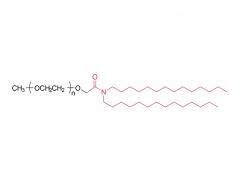


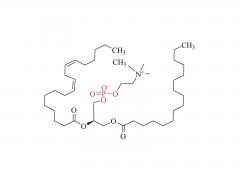
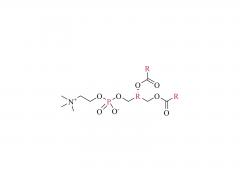
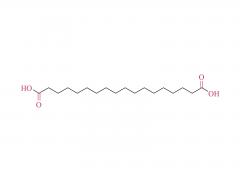
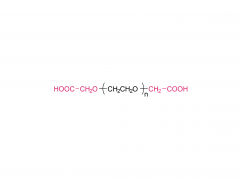
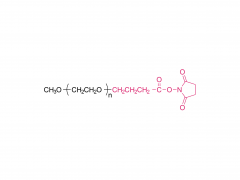
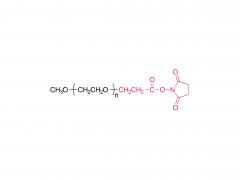
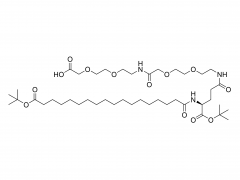
In modern cutting-edge applications, a connecting unit known as the PROTAC linker plays a critical role—it must precisely bridge different functional modules, and its purity and performance directly determine the efficacy, stability, and even safety of the end product. The high-purity requirements for such PROTAC linkers (typically needing to reach 99.9% or higher, with some scenarios even demanding impurity levels below 10 ppm) pose extremely stringent challenges for suppliers. As a key supporting force in the industrial chain, high-purity PROTAC linker suppliers must not only possess strong quality control capabilities but also balance technological innovation and personalized services to meet the demand for high-performance and high-reliability products in downstream fields. The following sections will provide an in-depth analysis of the core competitiveness and industry value of high-purity PROTAC linker suppliers.
I. Core Value: High Purity as the Foundational Prerequisite for Application Breakthroughs
The value of high-purity PROTAC linkers is fundamentally reflected in their decisive impact on end-application outcomes. In scenarios requiring precise functional transmission, the purity of PROTAC linkers directly affects the efficiency of module connections, overall stability, and safety. Insufficient purity can lead to functional transmission distortion, reduced effective lifespan, and, in extreme cases, end-product failure, resulting in significant losses. For example, in targeted applications, high-purity PROTAC linkers ensure that functional modules act precisely on the intended targets, reducing non-specific interference, while impurities may cause unnecessary side effects and diminish application reliability.
The high-purity PROTAC linkers supplied must meet two core requirements simultaneously: chemical homogeneity and performance stability. Chemical homogeneity means the structure and composition of the PROTAC linkers are highly consistent, avoiding performance fluctuations in end products due to batch variations. Performance stability requires that the linkers retain their original functions under various environmental conditions (such as temperature and humidity changes) without degradation or failure. These two requirements together form the foundation for downstream application innovation and represent the core value of high-purity PROTAC linker suppliers.
II. Supply Capability: Dual Assurance Through Technical Expertise and Full-Process Control
The ability to supply high-purity PROTAC linkers relies not merely on production equipment but on the comprehensive strength built upon technical expertise and a full-process control system.
(I) Raw Material Selection: Controlling Purity from the Source
The quality of raw materials directly determines the final purity of PROTAC linkers. High-quality suppliers must establish strict raw material selection criteria. First, raw materials must be verified by authoritative testing agencies to clarify core component content and impurity composition, with a focus on limiting trace impurities that significantly impact application outcomes. Second, microstructural analysis ensures the crystalline integrity and uniformity of raw materials, avoiding compromised processing performance due to structural defects. Finally, a long-term raw material supply evaluation mechanism ensures stability across different batches, preventing purity deviations caused by raw material fluctuations.
(II) Process Optimization: Achieving Purity Breakthroughs Through Precise Control
The production process for high-purity PROTAC linkers is highly complex and requires precise control of process parameters to achieve purity breakthroughs. Suppliers must optimize critical production parameters such as temperature, pressure, and reaction time based on long-term technical expertise to minimize byproduct generation. Additionally, specialized processing equipment should be employed to reduce the risk of impurity contamination (e.g., dust, moisture interference) in the production environment. For PROTAC linkers with special requirements, customized process routes must be developed to ensure purity while meeting specific structural and performance demands.
(III) Testing System: Multi-Dimensional Verification of Purity and Performance
“No purity without testing”—a comprehensive testing system is a critical guarantee for high-purity PROTAC linker supply. Suppliers must be equipped with high-precision testing devices to conduct multi-dimensional inspections on each batch of products: verifying core purity and impurity content through composition analysis to ensure compliance with high-purity standards; confirming structural integrity through characterization to avoid structural variations during processing; and simulating end-application scenarios through performance testing to validate functional transmission efficiency and stability. Additionally, a full-batch traceability system should be established to record key information such as raw material sources, production parameters, and test results, ensuring product quality is traceable and controllable.
III. Service Characteristics: Market Adaptation Through Customization and Efficient Response
With the diversification of downstream applications, the demand for high-purity PROTAC linkers is gradually trending toward “personalization” and “refinement,” making suppliers’ service capabilities a key competitive advantage.
High-quality suppliers must possess strong customization capabilities, enabling them to adjust PROTAC linker structural parameters (e.g., length, functional groups), purity standards, and performance indicators based on specific downstream client needs. For instance, optimizing the water solubility or biocompatibility of PROTAC linkers for particular application scenarios enhances their compatibility with end products while maintaining high purity. The essence of customization lies in “precise matching,” requiring suppliers to engage in deep communication with clients to understand the core demands behind application needs and achieve customized supply through technical optimization.
Moreover, efficient response capabilities are indispensable. The research and development cycles of downstream applications are often tight, requiring suppliers to shorten sample production periods, expedite order delivery, and provide timely technical support—such as offering application solutions and assisting with technical challenges during usage. The combination of rapid response and professional technical support effectively reduces clients’ R&D costs and time expenditures, forming a foundation of trust for long-term collaboration.
IV. Industry Empowerment: Value Extension from Single Supply to Ecological Synergy
The industry value of high-purity PROTAC linker suppliers has transcended mere product supply, gradually extending toward ecological synergy. By establishing joint R&D mechanisms with downstream clients, suppliers can engage early in the application innovation process, offering optimization suggestions for PROTAC linkers based on their technical expertise to help clients enhance end-product performance. Simultaneously, technological iterations drive purity upgrades and cost optimization of PROTAC linkers, lowering entry barriers for downstream applications and fostering innovation across the industry.
In cutting-edge application fields, technological breakthroughs in high-purity PROTAC linkers often drive innovation in a series of end products. For example, more stable high-purity PROTAC linkers can extend the effective duration of targeted products, while more refined structural designs can improve the precision of functional transmission. These breakthroughs create greater value space for downstream applications. Through continuous technological innovation and ecological collaboration, suppliers become vital forces driving industry progress.
As core supporters in cutting-edge application fields, high-purity PROTAC linker suppliers concentrate their competitive advantages in four dimensions: high-purity assurance, full-process control, customized services, and technological innovation. From raw material selection to process optimization, and from multi-dimensional testing to ecological synergy, suppliers must implement strict control across the entire chain and continuous technological iteration to provide stable and reliable high-purity PROTAC linkers to downstream clients. In the future, as cutting-edge applications continue to advance, requirements for high-purity PROTAC linkers will become even more stringent. Suppliers must further strengthen their technical expertise and service capabilities, grounded in high purity and driven by innovation, to continuously empower downstream application innovation and achieve a win-win scenario of industry value and self-development.